

Reading Room
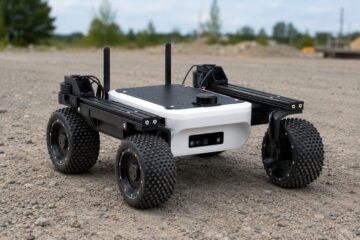
Raph Rover: Built for When Leo Rover Isn’t Enough – A Technical Deep Dive
TL;DR: Raph Rover is Fictionlab’s heavy-duty UGV designed for outdoor field robotics where the Leo Rover platform hits its payload,…
Read more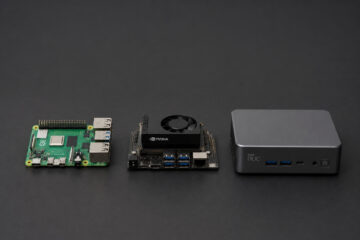
Raspberry Pi vs. NVIDIA Jetson vs. Intel NUC: Choosing the Right Brain for Your Robot
TL;DR: When you compare Raspberry Pi vs Jetson robot computing, the choice comes down to workload, power budget, and software…
Read moreBattery and Power Management for Field Robots: Runtime, Charging, and Hot Swapping
TL;DR: Field robot battery management decides whether your mission finishes or stalls in the middle of a field. You need…
Read more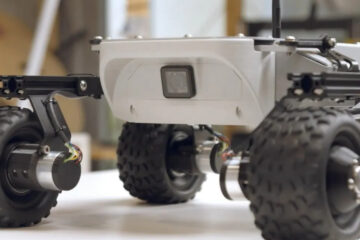
How to Design a Payload System for a Mobile Robot: Mounting, Weight, and Power
TL;DR: Robot payload design is the engineering discipline of integrating sensors, manipulators, and computing onto a mobile base without breaking…
Read more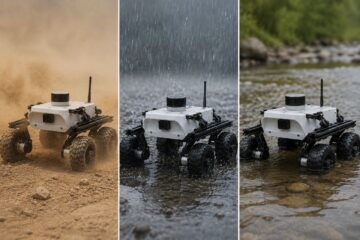
IP Ratings Explained: What IP54, IP65, and IP67 Actually Mean for Your Robot
TL;DR: The IP rating of a robot is a two-digit code defined by IEC 60529 that tells you how well…
Read more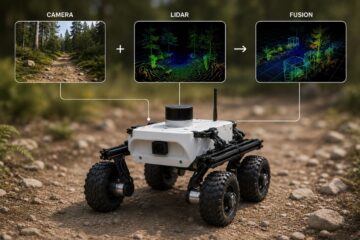
Camera + LiDAR Fusion: How to Build a Perception Stack for an Outdoor UGV
TL;DR: Camera + LiDAR fusion in ROS 2 combines dense color information from an RGB or RGB-D camera with accurate…
Read more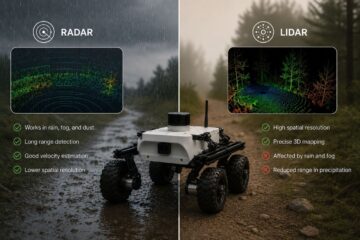
Radar vs. LiDAR for Outdoor Robots: When Rain Wins and When It Doesn’t
TL;DR: In the radar vs lidar outdoor robot debate, neither sensor wins universally. LiDAR gives you centimeter-level geometry and dense…
Read more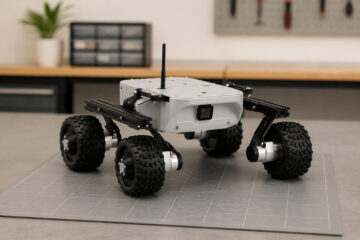
How to Properly Calibrate an IMU on a Mobile Robot (And Why Most Teams Skip It)
TL;DR: Proper IMU calibration in ROS 2 means three things: removing static bias from accelerometers and gyroscopes, characterizing noise with…
Read more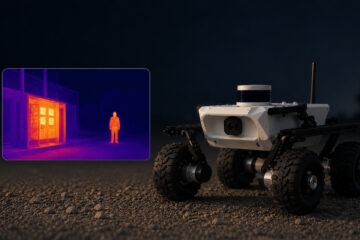
Thermal Cameras on Robots: Use Cases, Limitations, and ROS 2 Integration
TL;DR: Thermal cameras on robots let you see heat signatures that visible-light cameras miss: failing PV modules, overheating electrical contacts,…
Read more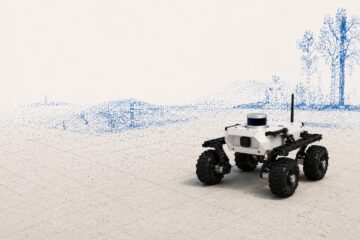
How to Process Point Clouds in ROS 2: A Practical Guide for Mobile Robots
TL;DR: Point cloud processing in ROS 2 boils down to four reproducible steps: subscribe to a sensor_msgs/PointCloud2 topic, downsample with…
Read more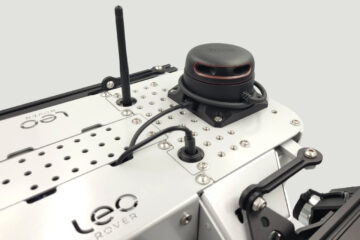
What Is a 3D LiDAR and When Should You Use It Instead of 2D?
TL;DR: A 3D LiDAR captures multiple scan layers (often 16 to 128 in mechanical multi-beam models, or a non-repeating 3D…
Read more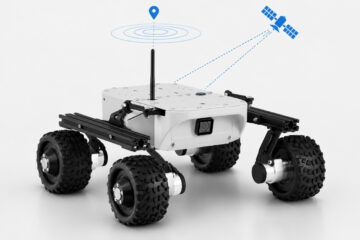
RTK GPS on a Field Robot: What It Is, Why You Need It, and How to Set It Up
TL;DR: RTK GNSS (often called RTK GPS, Real-Time Kinematic GPS) is a satellite positioning technique that uses carrier-phase measurements and…
Read more