

Reading Room
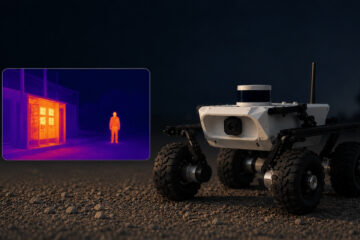
Thermal Cameras on Robots: Use Cases, Limitations, and ROS 2 Integration
TL;DR: Thermal cameras on robots let you see heat signatures that visible-light cameras miss: failing PV modules, overheating electrical contacts,…
Read more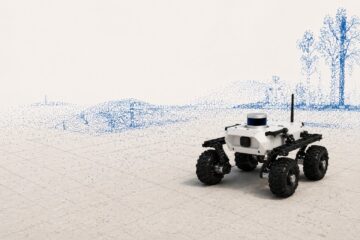
How to Process Point Clouds in ROS 2: A Practical Guide for Mobile Robots
TL;DR: Point cloud processing in ROS 2 boils down to four reproducible steps: subscribe to a sensor_msgs/PointCloud2 topic, downsample with…
Read more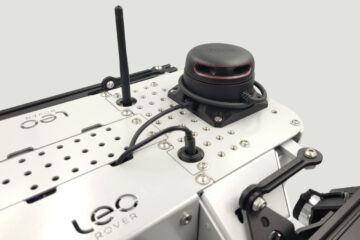
What Is a 3D LiDAR and When Should You Use It Instead of 2D?
TL;DR: A 3D LiDAR captures multiple scan layers (often 16 to 128 in mechanical multi-beam models, or a non-repeating 3D…
Read more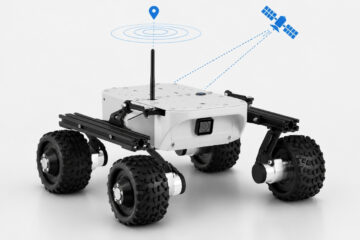
RTK GPS on a Field Robot: What It Is, Why You Need It, and How to Set It Up
TL;DR: RTK GNSS (often called RTK GPS, Real-Time Kinematic GPS) is a satellite positioning technique that uses carrier-phase measurements and…
Read more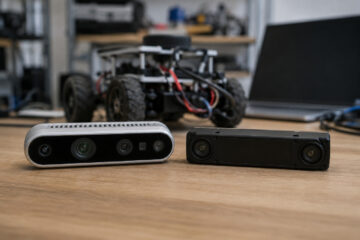
Intel RealSense D435 vs. OAK-D Lite: Which Depth Camera for Mobile Robotics Research?
TL;DR: The Intel RealSense D435 and the Luxonis OAK-D Lite solve the same problem (RGB-D perception for mobile robots) with…
Read more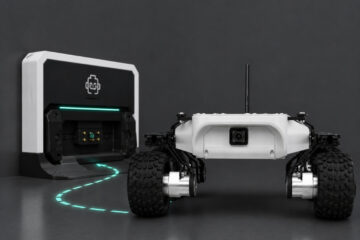
Autonomous Docking and Return-to-Base on a Mobile Robot: How It Works
TL;DR: Robot autonomous docking is the closed-loop process by which a mobile robot detects a known charging or service station,…
Read more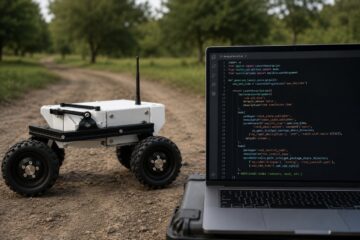
How to Build and Use a Custom ROS 2 Launch File for a Field Robot
TL;DR: A ROS 2 launch file starts and configures multiple nodes, parameters, and remappings from a single command. For a…
Read more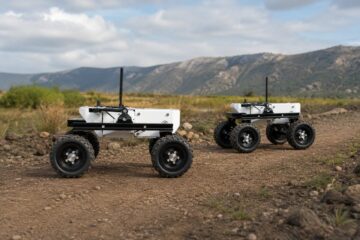
Multi-Robot Coordination with ROS 2: Getting Two Rovers to Work Together
TL;DR: A working ROS 2 multi robot setup needs three things done correctly: unique namespaces and TF frame IDs per…
Read more
How to Fuse GNSS and SLAM for Reliable Outdoor Localization
TL;DR: To fuse GNSS and SLAM in ROS 2 for reliable outdoor localization, you run two Extended Kalman Filters from…
Read more